The Instrument Rating is designed for pilots seeking to enhance their flying skills using advanced instrumentation and modern technology. It enables pilots to safely and legally navigate through clouds, restricted visibility, and complex airspace. With an Instrument Rating, pilots gain the ability to confidently fly in challenging weather conditions and tackle more advanced flight scenarios.
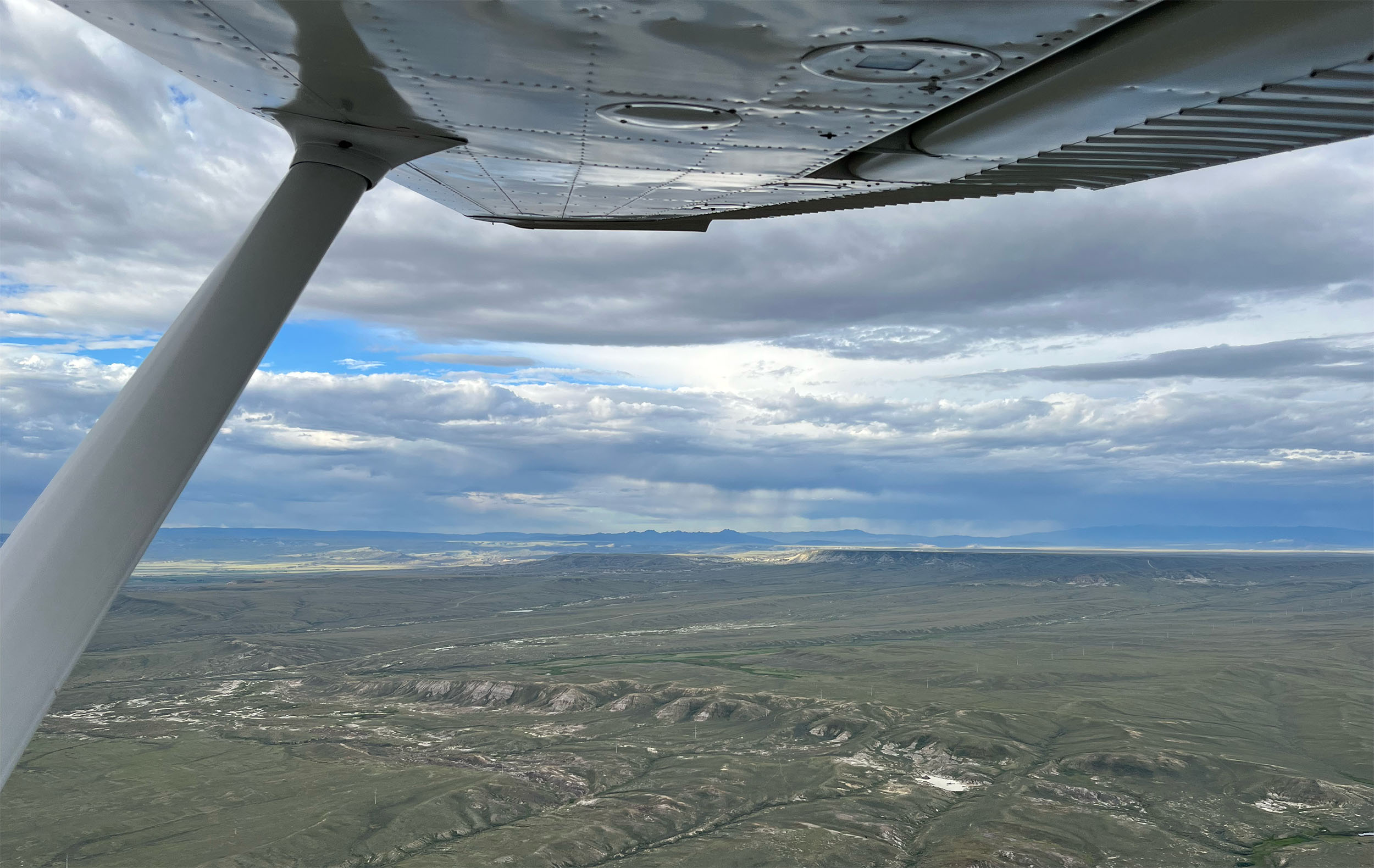
An Instrument Rating is meant for those pilots that are looking at advancing their flying skills with the use of advanced instrumentation and modern technology. An Instrument Rating allows for a pilot to safely and legally fly within clouds, restricted visibility, and advanced airspace.
The advantages of obtaining an Instrument Rating are plenty. With an Instrument Rating flights are no longer limited to clear weather days. One of the biggest reasons to add an Instrument Rating to your certificate is for enhanced safety not only within weather but during all types of flying. Instrument rated pilots are taught to a very high standard which shows truth in routine safety studies within the industry. The second common reason to add an Instrument Rating to your certificate is for expanded capability and reliability to your flight missions. More experience with instrument training results in far less cancellations due to weather. An Instrument Rating is also vital in making your flights easier through the difficult airspaces.
Just like Private Pilot flight training, Instrument flight training in comprised of two main areas:
Just like learning any new skill or new language, Instrument flying will take a steady commitment of time. Although this time does not have to be excessive and overwhelming we do recommend consistency which will prove to be beneficial in material retention and certification. Our recommendation is at least 2 lessons per week. We have many students that book upwards of 5 lessons per week which is very easy to accommodate with our staffing of Certified Flight Instructors. Our flight school operates year-round from Monday through Sunday. We are open 7 days per week minus the major federal holidays. Sundays are available by appointment with direct approval from your desired Certified Flight Instructor.
Highlights:
The Cessna 172 provides the perfect platform to build precision and confidence under the hood or in the clouds.
The Cirrus SR22T offers an unmatched instrument training experience in a high-performance, technically advanced aircraft. It’s the ideal platform for pilots preparing for real-world IFR operations or transitioning to complex and turbine aircraft.
Highlights:
Train like a professional with the technology, performance, and safety features found in today’s most advanced aircraft.
This is very dependent upon how often you are able to fly as well as spend time studying outside of flight your scheduled lessons. Your overall training time can be significantly reduced by utilizing our Certified Flight Instructors for ground lessons as well as routinely spending time on your Sporty’s home study training material. Flying a minimum of 2 lesson blocks per week you can expect to have your certificate in approximately 8-12 months. Completing 4 or more lessons per week can result in training completion in as little as 2-4 months.
At Rising Wings Aviation Inc., we understand that no one appreciates underestimates or sugarcoated costs. During your New Student Consultation, we provide a thorough breakdown of all flight training expenses, ensuring you’re never left with unexpected surprises.
Compared to similar flight schools nationwide, we are confident that our programs deliver exceptional efficiency and value. Over the years, countless students have told us, “You get what you pay for with flight training.” Unfortunately, many schools advertise only their bare minimum pricing and offer no apologies when actual costs exceed those estimates.
Because training times often go beyond the FAA’s required minimum hours, it’s essential to choose a flight school that sets honest and realistic pricing expectations. Rising Wings Aviation Inc. is that school.
The FAA minimum requirements to obtain an Instrument Rating:
· Age: 17 Years
· Hold a Private Pilot Certificate
· Be able to read, speak, write, and understand the English language.
· Total Flight Time: 35 Hours (Part 141) or 40 Hours Instrument training time as well as 50 hours of Pilot in command Cross country time (Part 61)
· Ground Instruction: 30 Hours (Part 141) or proficiency based hours (Part 61)
· Third-Class FAA Medical Certificate or BasicMed or greater (https://www.faa.gov/licenses_certificates/airmen_certification/basic_med)
(https://www.faa.gov/pilots/medical_certification)
· FAA Medical Certificate or BasicMed or greater (Rising Wings Aviation Inc. is a FAA Certified Testing Center) (https://faa.psiexams.com/faa/login)
· FAA Practical Test (Checkride) (Local Pilot Examiner available)